
When the Going Gets Tough
My inclination in the face of difficulty has always been to escape; it’s taken a while to learn there is no escape
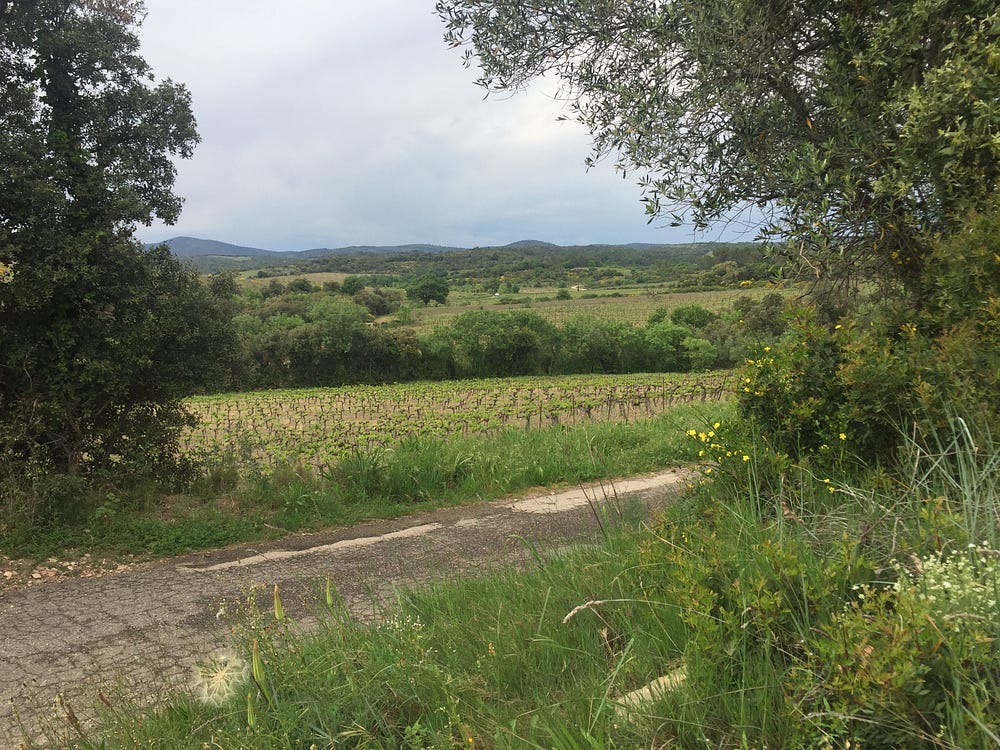
Thirteen years ago, I made what felt like an impulsive decision to move to France. Had I stayed in the United States, watching the increasingly alarming and bizarre turns of political life, I suspect an old instinct — to escape, to get the hell out of Dodge — would have resurfaced.
Escape has always been my reflex. I don’t honestly know whether I was running from something when I moved. At the time, I called it an adventure, a new chapter. Happily, it was, and still is. My life has expanded and grown richer in ways far beyond my expectations.
But if there was a subconscious motive — perhaps an attempt to outrun ageing, to prove I could still reinvent myself — my body quickly dispelled that notion. Three joint replacements and a growing list of medications made it clear: you can change countries, but you don’t outrun reality.
I’d brought When Things Fall Apart along as a kind of emotional insurance policy, something to reach for if everything did fall apart. Fortunately, despite a few rough patches early on, things held together. Over time, another of Pema Chödrön’s books, The Wisdom of No Escape, began to feel more relevant — and more confronting.
Gradually, I began to see how often I’d chosen escape throughout my life. When my second husband died suddenly of a brain aneurysm just after his 40th birthday, I did what came naturally: I packed the car, took my teenage daughter, and drove from California to Missouri. Barely across the state line, I realized something I didn’t want to admit. Grief had come with us. There was no outrunning it.
The lesson didn’t stick. Years later, in a struggling third marriage, I tried another version of escape — removing myself physically, distancing from the daily friction. It didn’t resolve anything; it simply delayed the inevitable.
As Chödrön writes, there’s a common misunderstanding that the best way to live is to avoid pain and try to get comfortable. We treat discomfort — grief, anger, fear, disappointment — as something to fix or get away from. We escape in all kinds of ways: distraction, consumption, numbing.
Mine has always been more literal. I want to get in the car and go, convinced that if I were somewhere else, in a different situation, I would feel better.
In The Wisdom of No Escape, Chödrön calls this the Elsewhere Mind — the belief that peace or happiness exists somewhere other than where we are. The lesson is simple, but not easy: what we have, right here, is already enough.
I saw this clearly during my first year in France. I was living in a dark apartment with stone floors, no outdoor space, and bits of plaster falling from the ceiling. I told myself I was happy — and I was, in many ways — but I also believed I would be happier somewhere else.
One hot midsummer day, a neighbour drove me to a brocante. She switched on the car’s air conditioning and smiled. “You can’t do without it, no matter what the French say.” She bought a bright yellow tablecloth for her patio and described, in glowing detail, the breeze through her open windows, the golden light of late afternoon, friends arriving for apéros.
I resented her. In her flowy white dress and breezy village house, she embodied everything I thought I was missing. I wanted it all — especially the car, any car, that would allow me to escape my dark apartment and flaking plaster.
But I couldn’t afford a car or a better place. I had no means of escape. I was stuck.
As frustrating as that felt, it was also the lesson. Slowly, I began to see that instead of resenting what I didn’t have, I could let go of the idea that something else was required for my life to feel complete. I could adapt, loosen my expectations, and even see it as part of the adventure I’d come for.
Life, of course, kept offering reminders. After one trip back to the States, my car — by then acquired — refused to start and sat for days at the village garage. My phone stopped charging. My wallet disappeared — cash, cards, everything. As I turned the house upside down looking for it, a mouse ran across the floor.
I tried not to scream.
The irony wasn’t lost on me. None of my usual escape routes were available — no car, no money, no easy solutions. I had no choice but to stay with what was happening.
Eventually, I found the missing wallet under a cushion. But by then, the point had already been made. The lesson wasn’t about solving problems; it was about how I met them. Resilience, patience, a bit more steadiness — even in the presence of a mouse.
We all want to avoid pain and get comfortable. But discomfort is part of life, just as much as pleasure. It isn’t easy to stay with what’s happening, without immediately trying to fix or escape it. Nor is it easy not to cling to the moments that feel good.
Life doesn’t hold still.
Even now, at 81, I still feel the urge to run from what seems like the source of a problem. But I try to remember what Chödrön points out: the problem isn’t always the situation itself, but the assumption that something better lies just beyond it.
The wisdom of no escape isn’t resignation. It’s the understanding that wherever we go — across countries, across relationships — we take ourselves with us. The grief, the longing, the restlessness — they don’t stay behind.
And neither does the possibility of joy.
I found that, even in that first dark apartment with the falling plaster. Looking back, that year — imperfect and often frustrating — was one of the richest of my life. Would it have been the same in my neighbour’s breezy house with the yellow tablecloth?
Who knows?
Thanks for responding, Michael. Fortunately, I love France and have no desire to come back. But I'm saddened by what's happening to the US.
There’s a lot of wisdom herein